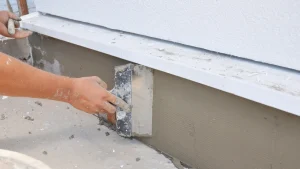
One of the moisture is one of the biggest threats in Toms River is moisture. This is likewise true for the remainder of the humid northeastern United States. Stucco that has been improperly installed may trap moisture inside your walls.
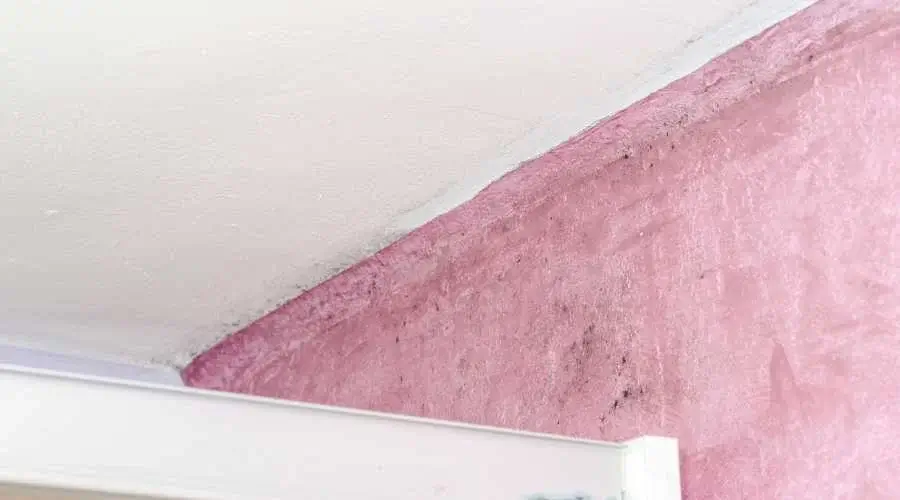
Mold, mildew, and fungus may grow due to moisture retention. If it penetrates the wooden framework of your house, it may cause the walls to deteriorate from the inside out.
Hiring expert stucco installers may assist you in protecting your home. They will learn how to install moisture control and protection systems.
This article will differentiate between moisture management and moisture protection. You’ll also learn why combining the two is the most effective method of protecting your house.
Moisture Management
Moisture management refers to how your wall system expel moisture that enters it. Modern stucco is a permeable exterior material for dwellings. Moisture enters the wall hollow via the stucco surface.
And it’s not only stucco that lets moisture in. You should always expect moisture to enter your walls at some time. This is true whether your home’s exterior is stucco, siding, or a veneer. How does your wall system handle moisture once it gets inside?
There are two primary methods for removing moisture from your walls. Moisture may escape through the bottom of the wall, evaporate through the top of the wall, or both.
Weep Screeds
Weep screeds are drainage openings at the bottom of walls, enabling moisture to “weep” out. They are ubiquitous in modern stucco, siding, stone, and brick veneer applications.
Air Vents
Air vents allow air to move through the wall, drying off any moisture that has been trapped. A weeping screed at the wall’s base also serves as an air vent. However, holes in the tops of the walls are sometimes seen.
These extra air vents improve airflow. This enhanced circulation aids in moisture evaporation through the top of the wall. However, they may have the opposite effect if they need to be correctly positioned. What you don’t want is moisture entering your wall cavity via the vents intended to dry it out.
Moisture Protection
Moisture prevention prevents moisture from entering your walls and house. For clarity, we’ll refer to keeping moisture out of your walls as exterior protection. Interior protection refers to keeping moisture out of your home.
External Moisture Protection
Water is removed from your walls using moisture control. External moisture protection, on the other hand, prevents moisture from entering your walls in the first place. What could be more satisfying than getting moisture out of your walls? There should be no moisture on your walls.
Gutters are a well-known exterior moisture prevention component. They direct rainfall away from the walls of your home and down to the ground. Rainwater would stream down and soak through your walls if gutters were not installed.
The paint on your home’s exterior may also aid in keeping moisture out. For example, elastomeric paint waterproofs the stucco surface. This paint, on the other hand, minimizes the likelihood of moisture penetrating the stucco surface.
Internal Moisture Protection
When moisture penetrates your walls, it adds another layer of protection. A water-resistive barrier (WRB) and flashing comprise this layer. Both the WRB and the flashing keep moisture out of the rest of your house.
They may not know it, yet you are already acquainted with WRBs. It’s the material used to cover new building frames. It is often green, although it may be a number of various hues depending on the manufacturer.
WRBs keep moisture away from the wooden framework of your house. They are not, however, indestructible. If water gets through the barrier, rot may occur.
Flashing prevents moisture from entering via doors, windows, and other access points. Moisture ingress is possible via any openings on the outside of your property. Inadequate flashing may exacerbate the situation by channeling moisture to these sensitive regions.
Stucco Installation Done Right
Moisture management and protection work best when used together. We understand the need for moisture control and maintenance as expert stucco contractors. During repair operations, we often see the devastating effects of poor installation.
Water will accumulate inside your walls if moisture is not controlled. As a result, substantial damage will occur over time. Without moisture protection, even a little water may soon become a significant issue. Water will seep into your house if it cannot leave.
Too much moisture might cause any part of the system to fail. As a result, moisture control and protection must function in tandem. They each conceal the shortcomings of the other.
Water will continue to permeate your walls. You may be confident with these practices in place sure it will be in little dosages. And any moisture that does accumulate will quickly evaporate or drain out of the wall cavity.
Toms River Stucco, Greater Toms River Trusted Stucco Experts
Is water leaking through your walls and into the rest of your home? Have you seen mold or mildew on your outside walls? If this is the situation, it is time to act on a change stucco inspection.
An examination may help identify the source of the damage and outline the necessary repair work. Water penetration almost always demands cleaning. During cleanup, the exterior is destroyed and reconstructed. This includes moisture management as well as internal moisture protection systems.
Please call the experts at Toms River Stucco to schedule an inspection. Don’t let the damage to your home deepen.